Contact us
|
Whatsapp
Whatsapp:+86 13889850231
Whatsapp:+86 13889850231

In concrete and pavement engineering, geosynthetics and engineering fibers provide multiple technical approaches to address issues such as reflective cracking, concrete cracking, slope protection, and structural waterproofing and durability through mechanisms including reinforcement, isolation, filtration, and drainage. Additionally, functional materials such as asphalt fiber boards and anti-rutting agents play corresponding roles in specific application scenarios.
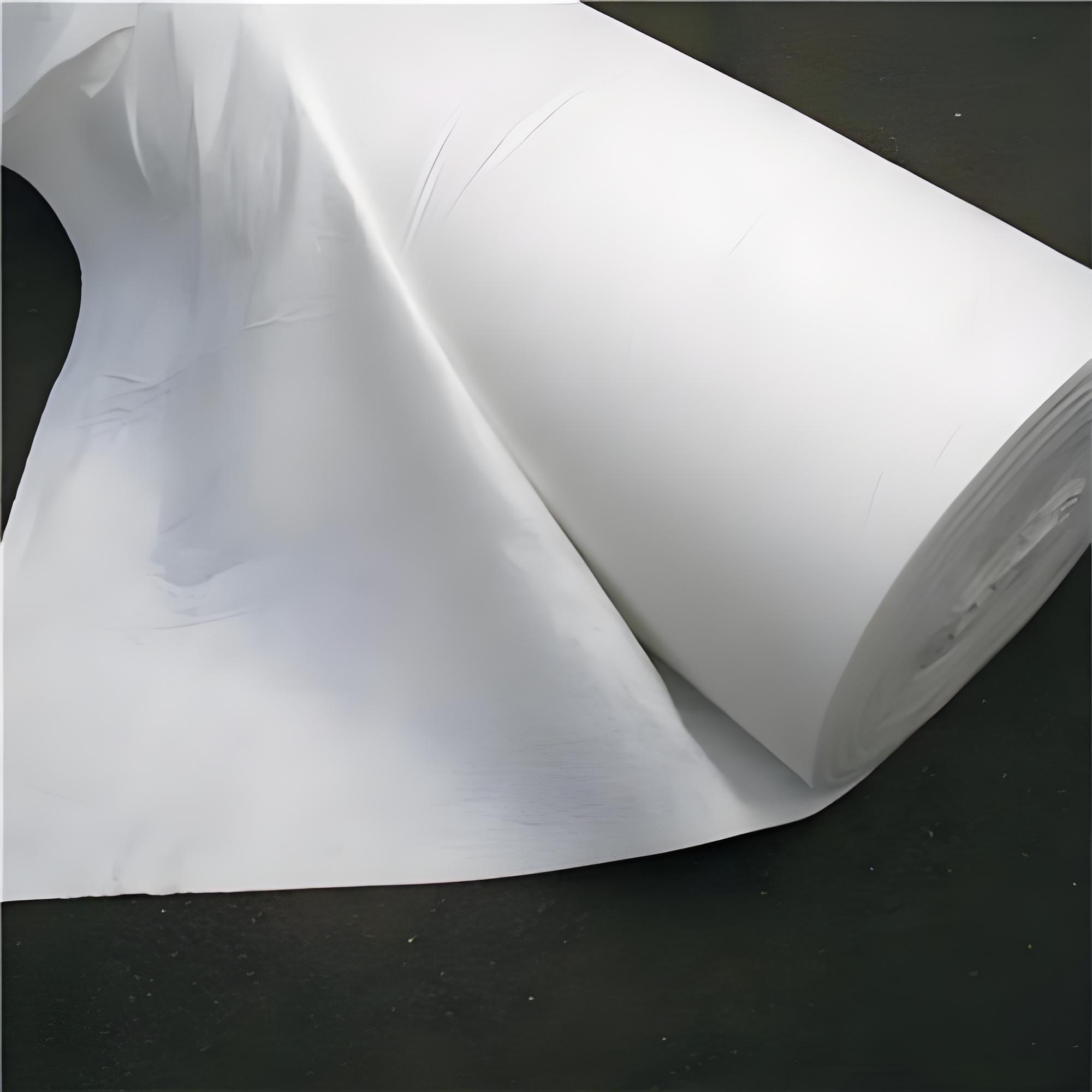
Geosynthetics are a broad range of products widely used in geotechnical and transportation engineering, including geotextiles, geogrids, geomembranes, drainage boards, and three-dimensional vegetation nets. Their primary functions encompass isolation, filtration, drainage, reinforcement, protection, and puncture resistance.
When overlaying asphalt layers on existing cement concrete pavements or semi-rigid bases, reflective cracking is a common distress type. Geotextiles placed between the existing pavement and the asphalt overlay function through reinforcement, stress absorption and dispersion, and waterproofing. Geotextiles possess relatively high tensile strength. When relative displacement occurs on both sides of a crack due to temperature or loading effects, the geotextile bears tensile stress, providing a bridging and toughening effect. Geotextiles impregnated with asphalt also provide a waterproofing function, preventing moisture from penetrating the base layer and effectively delaying the appearance of reflective cracks.
Geogrids, as another important category of geosynthetics, demonstrate distinct advantages in concrete reinforcement. Test studies indicate that placing geogrids in concrete can increase flexural and splitting tensile strength, while also influencing concrete porosity. In pervious concrete reinforced with geogrids, both compressive and flexural strength show improvement. The failure mode of concrete beams shifts from brittle failure to ductile failure, with toughness increasing after cracking and crack development being restrained.
Basalt fiber geogrids, as a newer reinforcement material, utilize the favorable interfacial bonding between basalt fibers and cementitious matrices. When placed in concrete layers, they can effectively enhance pavement compressive strength as well as tensile and flexural strength of beam structures.
Geomembranes, drainage boards, flexible perforated pipes, plastic blind drains, and sodium bentonite waterproof liners serve functions in impermeability, drainage, and waterproofing respectively. Three-dimensional vegetation nets and ecological bags are suitable for slope greening and ecological protection applications.
Engineering fibers are short fibers incorporated into cement-based materials to improve crack resistance and toughness. Engineering fibers for cement concrete include steel fibers, polypropylene fibers, polyacrylonitrile fibers, polyvinyl alcohol fibers, polypropylene mesh fibers, and mortar crack-resistant fibers. Engineering fibers for asphalt concrete include polyester fibers, basalt fibers, polyacrylonitrile fibers, cellulose fibers, and granular or flocculent wood fibers.
Fibers form a randomly distributed three-dimensional network within concrete, providing reinforcement at the microstructural level. Research on steel-polypropylene hybrid fibers indicates that the combination of steel fiber and polypropylene fiber can achieve measurable improvements in compressive strength and splitting tensile strength over reference groups. Specific formulations for flexural strength also show increases over baseline values.
Under low-temperature conditions, the synergistic effect of hybrid fibers becomes more pronounced. Steel-polypropylene hybrid fiber concrete retains a substantial portion of its compressive strength after freeze-thaw cycles, with splitting tensile strength loss limited and flexural strength maintained at usable levels. Steel fibers, through their high elastic modulus, inhibit macro-crack propagation, while polypropylene fibers, through their ductility, control micro-damage. The two working in combination form a multi-level crack-resisting network, effectively mitigating the deterioration of mechanical properties in concrete under low-temperature environments.
For higher-grade concrete, incorporating steel fiber and polypropylene fiber can effectively improve both compressive and flexural strength.
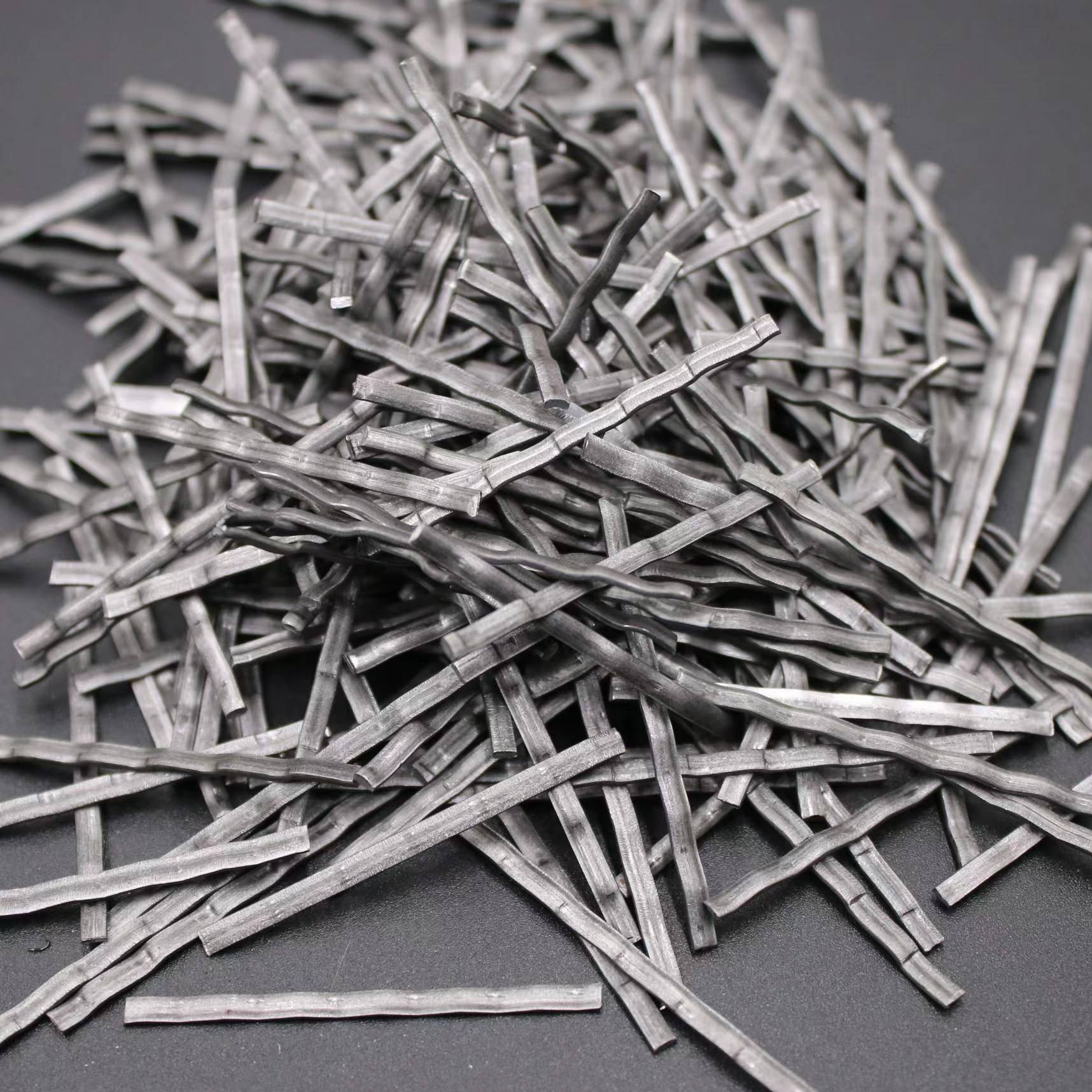
Different fiber types have different performance characteristics: steel fibers demonstrate notable energy absorption capacity; polypropylene fibers show effectiveness in improving compressive failure modes and reducing mass loss after freeze-thaw cycles; polyvinyl alcohol fibers combine relatively high tensile strength with good toughness. Selection should be based on comprehensive consideration of specific project requirements including crack resistance, toughening, and durability.
Asphalt fiber boards (glass fiber boards) are semi-rigid sheet materials made from inorganic fibers such as glass fiber as reinforcement, combined with asphalt.
Thermal insulation performance: Glass fibers have relatively low thermal conductivity. The irregular arrangement of fibers within the board prevents air convection and reduces heat conduction. These boards are suitable for thermal insulation applications up to certain temperatures and thermal preservation applications in colder conditions.
Sound absorption and insulation performance: The fiber structure provides the boards with good sound absorption properties. Sound absorption coefficients are related to fiber bulk density, board thickness, and fiber diameter. They can be used for sound-absorbing layers or sound insulation treatment in specialized buildings.
Moisture resistance: Under standard test conditions of temperature and relative humidity, moisture absorption rate remains low; after immersion in room-temperature water, water absorption rate is also maintained at modest levels.
Vibration isolation performance: When used as isolation between building foundations, asphalt fiber boards can provide measurable vibration isolation effects.
Asphalt fiber boards are suitable for cold storage insulation, wall insulation in air-conditioned rooms, outer layer insulation for ventilation ducts, sound insulation in broadcasting and recording studios, and foundation vibration isolation applications.
Asphalt pavement anti-rutting agents: Used in asphalt concrete surface layers to reduce rutting deformation by improving the high-temperature stability and shear resistance of the mixture.
Colored asphalt: Includes colorless asphalt binders and pigments in various colors, used for landscape pavements and colored paving projects.
Geotextiles, geogrids, and other geosynthetics provide value in pavement reinforcement and slope protection through reinforcement, isolation, and crack prevention mechanisms. Engineering fibers improve crack resistance and toughness of concrete through three-dimensional network distribution, with different fiber types having different performance characteristics in tensile strength, energy absorption, and durability; the synergistic effects of hybrid fibers are particularly notable under low-temperature and freeze-thaw conditions. Asphalt fiber boards serve functions in thermal insulation, sound insulation, and vibration isolation. Appropriate selection of these material categories in practical engineering contributes to enhanced service performance and durability of pavements and concrete structures.
Consultation Hotline:
+86 13889850231
Email:sales01@xzhch.com
Address:No.33, Nan'er Road, Heping District, Shenyang, Liaoning Province
Copyright © 2002-2025 非商用版本 Registration:Liaoning ICP record