Contact us
|
Whatsapp
Whatsapp:+86 13889850231
Whatsapp:+86 13889850231

Water that cannot be removed effectively from soil and structural backfill can affect the long-term condition of roads, retaining structures, slopes and other civil engineering works.
The problem is not simply the presence of water.
Engineers also need to consider:
For this reason, subsurface drainage should be considered as a complete system, rather than simply installing a drainage pipe.
Depending on the project, this system may include plastic blind drains, geotextiles, perforated drainage pipes, drainage aggregates and outlet structures.
Subsurface drainage is designed to collect and convey water below ground level.
Unlike surface drainage, which mainly handles visible runoff, subsurface drainage deals with water entering:
A typical drainage system may perform three different functions:
filtration → collection → conveyance
These functions are not necessarily performed by one material.
That distinction is important when selecting drainage products.
A perforated pipe can collect and transport water, but it does not automatically solve every drainage problem.
If surrounding fine particles migrate into the drainage zone, they may gradually affect:
This is why filtration and drainage layers are often used together with the pipe.
The complete design should consider both water flow and soil retention.
A plastic blind drain is a porous drainage material designed to provide interconnected channels through which water can move.
Compared with a conventional drainage trench that relies primarily on graded stone, a prefabricated plastic drainage structure can provide a defined drainage path within the engineering system.
Depending on its structure and project design, it may be used for:
The required size and structure should be selected according to the project conditions.
A blind drainage system generally needs to perform two tasks.
First, water needs to enter the drainage structure.
Second, the collected water needs a continuous route toward an outlet.
The internal void structure of the plastic blind drain provides a pathway for water movement.
However, the surrounding soil conditions remain important.
If fine particles can enter the drainage structure, an appropriate filtration layer may be required.
This is where geotextile becomes relevant.
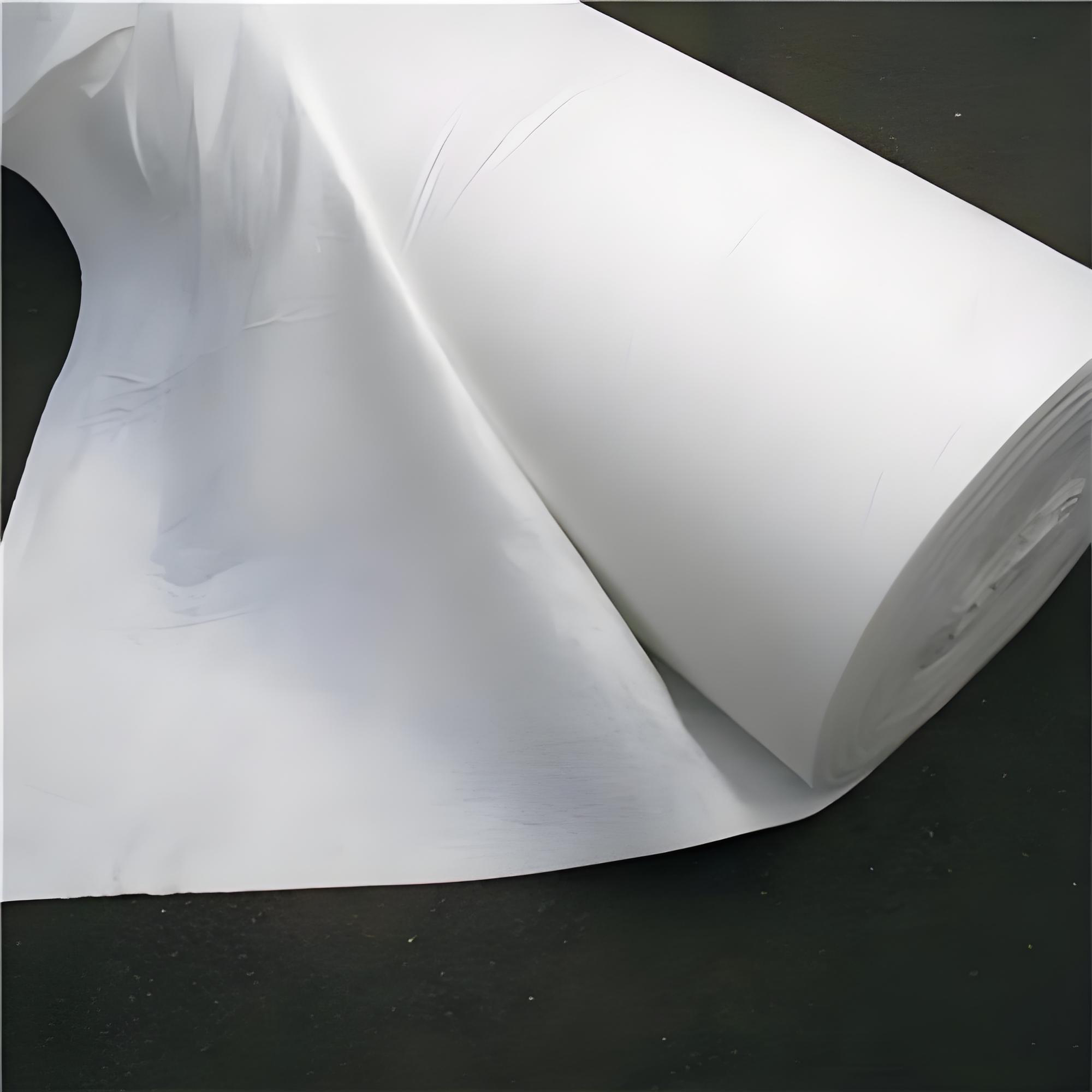
Geotextile can perform filtration and separation functions in drainage systems.
Its purpose is not simply to “wrap the drain.”
The material should allow water to pass while helping control the migration of surrounding soil particles.
Selection therefore depends on factors such as:
Using a geotextile without considering the surrounding soil may not provide the intended filtration behavior.
These two functions are often confused.
Allows water to move across a boundary while limiting soil-particle migration.
Provides a pathway for collected water to move toward an outlet.
A geotextile may primarily provide filtration, while a plastic blind drain or perforated drainage pipe provides drainage and conveyance.
A functioning underground drainage system often requires both.
Perforated pipes contain openings that allow surrounding water to enter the pipe.
They are commonly considered where water needs to be collected along a defined underground route and transported to an outlet.
Possible applications include:
Pipe diameter, perforation configuration and stiffness should be selected according to the engineering design.
No.
Although both are drainage products, their structures are different.
A plastic blind drain generally provides a porous drainage body with interconnected flow paths.
A perforated drainage pipe collects water through openings and conveys it through the pipe interior.
Depending on project conditions, they may be:
Therefore, the question should not always be:
“Which one is better?”
A more useful question is:
“Which drainage structure matches the water source, soil condition and required discharge route?”
Water entering road structures may come from:
If water remains within pavement or subgrade layers, it may affect the condition of the road structure.
A subsurface road drainage system may therefore include:
filter layer → drainage layer → collector → outlet
Depending on the design, geotextile, plastic blind drains and perforated pipes can form parts of this system.
The answer depends on where water is expected to accumulate.
Possible locations include:
Drainage materials should not simply be installed where construction space is available.
Their position should correspond to the expected water path.
Water accumulating behind a retaining wall can contribute to hydrostatic pressure.
For this reason, retaining-wall design often includes provisions for removing water from the backfill.
A drainage arrangement may include:
Plastic drainage materials may also be incorporated depending on the wall design.
The objective is to provide a controlled path for water rather than allowing it to remain behind the structure.
A drainage system can collect water effectively but still fail to function as intended if the water has nowhere to go.
Every drainage design should consider the final discharge point.
Possible outlets include:
The outlet should remain accessible and should be designed according to the project drainage requirements.
Water within a slope can influence soil conditions and pore-water pressure.
Depending on the geotechnical design, drainage measures may be used to intercept or remove part of this water.
Possible components include:
The appropriate arrangement depends on geology, groundwater conditions and slope geometry.
Drainage materials should be selected as part of the geotechnical design rather than treated as an isolated product.
Clogging can occur for different reasons.
Potential causes include:
Therefore, anti-clogging performance cannot be judged only by the size of the drainage product.
The surrounding filtration system is also important.
No.
A very small opening may retain fine particles, but filtration design also needs to consider water flow.
The relationship between:
soil particle size + geotextile opening size + permeability
should be evaluated together.
The objective is to control soil migration while maintaining the required water passage.
Therefore, geotextile selection should be based on project soil conditions.
Different projects can generate very different quantities of water.
A landscaping drain and a road-cut drainage system may not have the same requirements.
Drainage capacity may be influenced by:
The selected drainage material should therefore correspond to the expected flow conditions.
It can.
Underground drainage materials may be subjected to:
If the drainage structure deforms significantly, its internal flow space may change.
For buried applications, mechanical properties should therefore be considered together with drainage requirements.
Even a correctly selected drainage material can perform differently if installation conditions are not controlled.
Common issues may include:
Installation should follow the project design and applicable construction requirements.
Where gravity drainage is intended, the pipe or drainage path generally needs an appropriate gradient toward the outlet.
The required gradient depends on:
A pipe installed without a suitable discharge route may retain water instead of conveying it effectively.
Rather than beginning with a product name, it is useful to begin with project conditions.
Groundwater, infiltration, surface runoff or another source.
Consider particle distribution and permeability.
Identify where water needs to be collected and where it will be discharged.
Consider burial depth and external loads.
Choose a filtration solution compatible with the surrounding soil.
Determine the required drain or pipe size according to project conditions.
Connections, joints, wrapping and outlets should be considered before construction.
For engineering drainage materials, simply asking:
“What is the price per meter?”
may not provide enough information.
A more useful inquiry includes:
For perforated drainage pipes, buyers should also specify the required diameter and pipe structure.
A project normally requires more than straight pipe.
Depending on the system design, fittings may include:
Therefore, procurement should consider the complete drainage system, not only the quantity of straight pipe.
This is particularly important for international projects where purchasing missing fittings later may delay installation.
Depending on the product and project, buyers may need to confirm:
The required items vary according to the type of drainage product.
For engineered drainage products, drawings can provide information that a product name cannot.
A drawing may show:
This allows the supplier and buyer to confirm whether the proposed product corresponds to the project requirement.
A plastic blind drain is a porous drainage material with interconnected internal spaces that can provide a pathway for subsurface water.
Depending on project design, it may be used in roads, slopes, retaining structures, tunnels, landscaping and other underground drainage applications.
A blind drain provides drainage through a porous internal structure, while a perforated pipe collects water through openings and conveys it through the pipe interior.
Geotextile can provide filtration and separation, allowing water to pass while helping control migration of surrounding soil particles.
The appropriate filtration arrangement depends on soil conditions and system design. The need for geotextile should therefore be evaluated according to the project.
Possible causes include fine-particle migration, unsuitable filtration, sediment, installation contamination and blocked outlets.
Product structure, diameter, quantity, applicable standard, fittings, project application and destination are useful starting information.
For projects involving roads, retaining walls, slopes or underground drainage, product selection should begin with the engineering requirement rather than only the unit price.
When requesting a quotation, buyers can provide:
project application + product type + dimensions + technical requirements + quantity + fittings + destination
For projects with drawings or technical specifications, these documents can also be used to confirm the required product configuration before quotation.
Consultation Hotline:
+86 13889850231
Email:sales01@xzhch.com
Address:No.33, Nan'er Road, Heping District, Shenyang, Liaoning Province
Copyright © 2002-2025 非商用版本 Registration:Liaoning ICP record