Contact us
|
Whatsapp
Whatsapp:+86 13889850231
Whatsapp:+86 13889850231

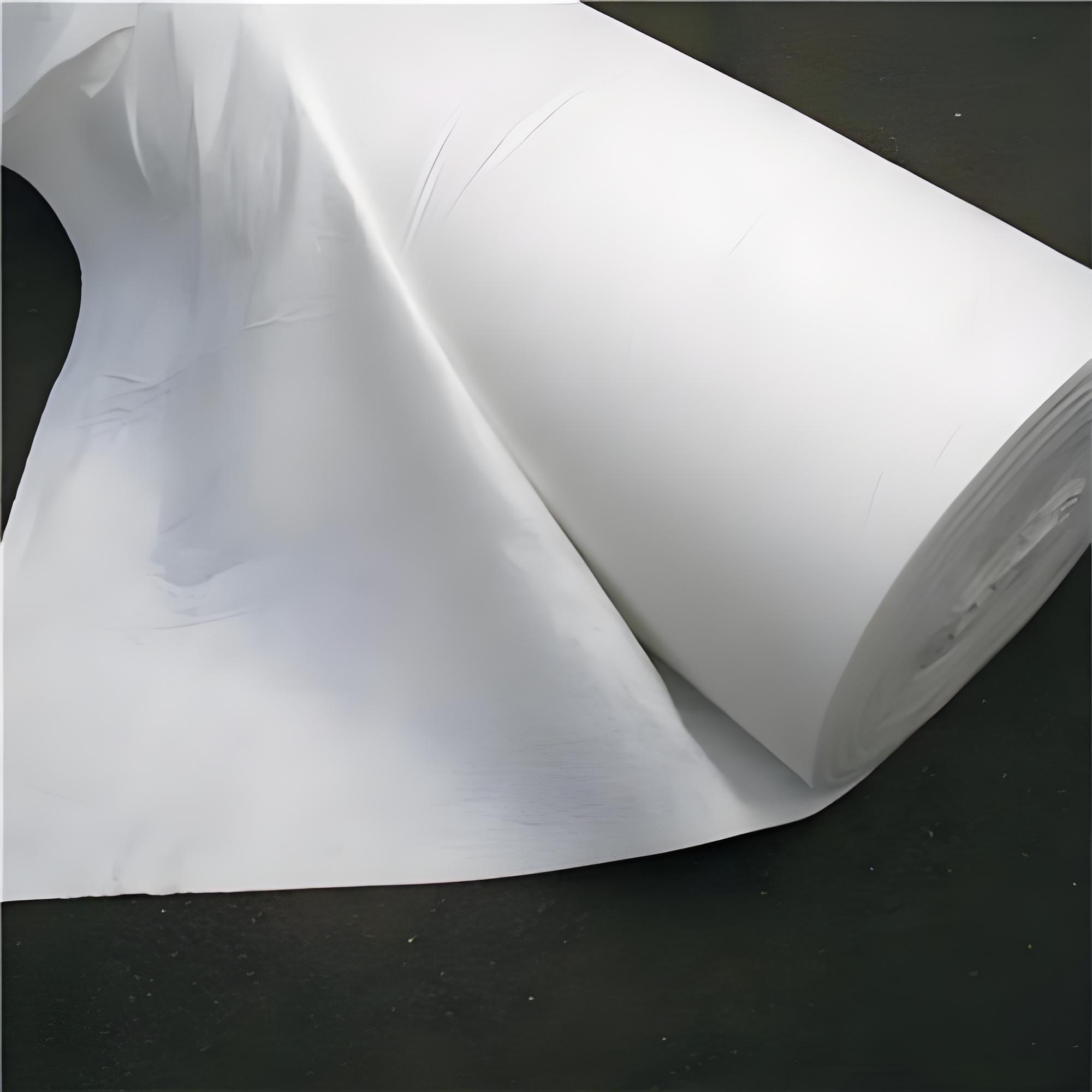
Geotextile is a permeable textile material used in contact with soil, rock or other geotechnical materials in civil engineering and construction projects.
Depending on its structure and application, geotextile can perform functions such as:
Geotextiles are used in various infrastructure projects, including roads, drainage systems, retaining structures, foundations, landscaping and other geotechnical works.
However, geotextile is not one single standardized material suitable for every project.
Different products can vary considerably in:
For this reason, selecting geotextile should begin with the required engineering function, rather than simply selecting a fabric according to weight or appearance.
A geotextile may perform one or several functions within an engineering system.
The most common functions include:
Geotextile can be placed between two different material layers to help limit their intermixing.
Water can pass through the geotextile while the material helps retain selected soil particles.
Certain geotextiles can facilitate movement of water within or through an engineering system.
Geotextile can be used as a protective layer between materials.
Depending on the product and design, certain geotextiles can contribute tensile resistance within a soil structure.
These functions are related but should not be treated as identical.
A geotextile selected primarily for filtration, for example, may require different properties from one selected primarily for reinforcement.
Roads and other civil engineering structures often contain multiple layers of materials.
For example:
subgrade soil → aggregate base → pavement structure
If fine soil particles migrate into a coarse aggregate layer, the characteristics of the layers may change over time.
A geotextile placed between them can help maintain separation while allowing appropriate water movement.
This is why geotextiles are commonly considered in road and foundation construction.
Road performance depends on the interaction between the subgrade, base course and pavement layers.
If a soft or fine-grained subgrade mixes extensively with aggregate, the effective aggregate layer can change.
A separation geotextile can help reduce this intermixing.
However, the geotextile does not replace appropriate:
It functions as one component of the overall road structure.
Filtration involves two simultaneous requirements:
Allow water to pass while controlling soil-particle movement.
This balance is important.
If the openings are unsuitable for the surrounding soil, filtration performance may not meet the design requirement.
Therefore, geotextile filtration design can consider parameters such as:
Simply selecting the thickest fabric does not necessarily provide the most appropriate filtration performance.
Drainage is another important application area.
Geotextiles may be used with:
In such systems, the geotextile can help separate surrounding soil from the drainage medium while allowing water to enter the drainage system.
This creates a direct relationship between geotextile and drainage products in many civil engineering projects.
A common drainage arrangement may include:
soil → geotextile → drainage aggregate → perforated pipe
Water moves from the surrounding soil toward the drainage layer and then into the perforated pipe.
The geotextile may act as a filtration and separation layer.
However, system design depends on:
The components should therefore be selected as a system rather than independently.
A plastic blind drain is another drainage material used in certain civil engineering applications.
Depending on the system design, geotextile may be used around or together with a drainage core.
The drainage core provides a path for water movement, while the surrounding filter material helps control soil-particle entry.
This type of combination can be considered in applications such as:
Actual design should follow the project requirements.
One of the most common questions when selecting geotextile is:
Should I use woven or nonwoven geotextile?
There is no universal answer.
The two categories have different structures and can be selected for different engineering requirements.
Woven geotextile is produced by interlacing yarns or tapes in a woven structure.
Depending on the product design, woven geotextiles can provide relatively defined tensile characteristics.
They may be considered in applications where:
are important.
However, specifications vary between products.
The term "woven geotextile" alone is not sufficient for engineering selection.
Nonwoven geotextile is produced by bonding fibers using mechanical, thermal or other manufacturing processes.
Needle-punched nonwoven products are commonly encountered in civil engineering.
Depending on their design, nonwoven geotextiles may be considered for:
Again, this does not mean every nonwoven geotextile is suitable for every filtration or drainage application.
The actual technical parameters need to be checked.
For drainage and filtration applications, nonwoven geotextiles are commonly considered because their structure can provide useful hydraulic and filtration characteristics.
But selection should not be based on the word "nonwoven" alone.
Important parameters may include:
So the correct question is not:
"Is nonwoven always better for drainage?"
but:
"Does this geotextile meet the filtration and hydraulic requirements of the drainage design?"
Geotextile products are often described by GSM, meaning grams per square metre.
For example:
200 g/m², 300 g/m², 400 g/m²
refer to mass per unit area.
This is a useful product parameter, but it should not be treated as a complete performance specification.
Two geotextiles with the same mass per unit area can have different:
Therefore:
Higher GSM does not automatically mean that a geotextile is more suitable for a project.
Tensile strength describes the material's resistance to tensile loading under specified test conditions.
It may be particularly relevant in applications involving:
However, tensile strength should be considered together with elongation and other mechanical characteristics.
A single strength number does not completely describe geotextile behavior.
During installation, geotextiles may come into contact with:
This can create localized stresses.
Puncture-related properties may therefore be relevant when evaluating whether a geotextile can withstand installation conditions.
Protective measures and appropriate construction practices are still required.
Apparent Opening Size (AOS) is a parameter related to the effective openings within a geotextile.
It is particularly relevant to filtration design.
The objective is not simply to select the smallest possible opening.
If the opening characteristics are inappropriate, the filtration system may not function as intended.
Selection should consider the particle-size distribution of the soil and the hydraulic requirements.
Not necessarily.
A filtration geotextile must balance:
water flow + soil retention.
Selecting only for very high water flow without considering soil retention may not satisfy the filtration requirement.
Conversely, restricting flow too much may also create hydraulic problems.
This is why permeability and opening characteristics should be evaluated together.
Road construction is a major geotextile application area.
Depending on the road design, geotextile may be used between:
Its role may include separation, filtration or stabilization.
For road projects, selection may need to consider:
Water around foundations can create engineering and durability concerns.
A foundation drainage system may include:
In such a system, geotextile can help control soil migration into the drainage layer.
But it should not be confused with waterproofing.
Geotextile manages filtration and drainage functions; it is not automatically a waterproof membrane.
Drainage behind retaining walls is important because water accumulation can contribute to hydrostatic pressure.
A drainage system behind the wall may incorporate:
Geotextile may provide filtration and separation functions within this system.
The complete wall and drainage design should be determined according to project conditions.
Geotextiles can also be considered in certain slope and erosion-control systems.
Depending on the design, their function may involve:
However, slope stability is a geotechnical engineering issue.
Geotextile selection alone does not replace an appropriate slope stability analysis.
Geotextile itself should generally not be confused with a waterproof membrane.
Many geotextiles are intentionally permeable.
Their purpose may be to allow water to move while controlling soil particles.
In waterproofing systems, geotextile can sometimes be used as:
The waterproofing function is normally provided by another material specifically designed for that purpose.
A practical selection process begins with the project function.
Is the material intended for:
Determine whether the priority is:
Consider soil particle distribution, strength and hydraulic characteristics.
Check the required tensile, elongation, puncture and installation-related properties.
For filtration and drainage, evaluate permeability and opening characteristics.
Use the engineering specification and applicable test standards.
Consider aggregate size, equipment and potential installation damage.
Two geotextile rolls may look similar but have significantly different technical properties.
Visual inspection cannot reliably determine:
For engineering applications, technical data and relevant test reports provide a more meaningful basis for comparison.
A buyer may ask:
"I need 300 gsm geotextile."
Weight is useful, but the application still needs to be clarified.
A 300 g/m² product intended for one function may not necessarily satisfy the specification of another project.
When possible, selection should include both:
mass per unit area + performance requirements.
Geotextile does not drain an entire project by itself.
A drainage system may require:
geotextile + drainage core or aggregate + pipe + outlet + correct slope.
If the outlet is blocked or the drainage layer is poorly designed, changing the geotextile alone may not solve the problem.
The complete drainage path needs to be considered.
Geotextile is used in civil engineering for functions including separation, filtration, drainage, protection and, depending on product design, reinforcement.
Woven geotextiles have an interlaced structure, while nonwoven geotextiles are formed by bonding fibers. Their mechanical and hydraulic characteristics differ depending on product design.
Nonwoven geotextiles are commonly considered for filtration and drainage, but the product should be selected according to permeability, opening size, soil and project requirements.
It means the geotextile has a nominal mass per unit area of approximately 300 grams per square metre. It does not by itself describe all engineering properties.
No. The appropriate product depends on mechanical, hydraulic and filtration requirements.
Many geotextiles are permeable and designed to allow water to pass. They should not automatically be treated as waterproof membranes.
Yes, geotextile can form part of a drainage system containing drainage aggregate and perforated pipe, depending on the engineering design.
Consider the required function, subgrade conditions, aggregate, mechanical properties, filtration requirements, installation conditions and project specification.
Geotextile is not simply a sheet of synthetic fabric placed beneath soil or aggregate.
Its role in civil engineering depends on the function required by the project:
Separation → Filtration → Drainage → Protection → Reinforcement
For road construction, foundation drainage, retaining walls and other infrastructure projects, the appropriate geotextile should be selected by considering:
soil conditions + mechanical properties + permeability + apparent opening size + installation conditions + project specifications.
The common practice of selecting a geotextile only according to GSM or thickness may overlook important engineering parameters.
A more practical approach is:
Define the engineering function first, then select the material specifications required to perform that function.
Consultation Hotline:
+86 13889850231
Email:sales01@xzhch.com
Address:No.33, Nan'er Road, Heping District, Shenyang, Liaoning Province
Copyright © 2002-2025 非商用版本 Registration:Liaoning ICP record