Contact us
|
Whatsapp
Whatsapp:+86 13889850231
Whatsapp:+86 13889850231

Water management is an important part of underground construction.
Tunnels, retaining walls, underground foundations, basements and other below-ground structures may be exposed to groundwater, infiltration, surface runoff or water accumulated within surrounding soil.
A practical underground water-management system usually does not rely on a single material.
Instead, different materials may perform different functions:
Materials such as geotextiles, plastic blind drains, perforated drainage products and waterstops can therefore be considered as different parts of a broader underground drainage and waterproofing system.
The correct material depends on where the water comes from, where it needs to go, the type of structure and the surrounding geological conditions.
An underground drainage system is designed to collect and direct water away from locations where uncontrolled accumulation may affect the structure or surrounding soil.
Depending on the project, water may originate from:
A drainage system typically needs to provide a continuous path:
Water enters → water is collected → water is filtered where necessary → water is transported → water is discharged.
If one part of this path does not function as intended, water may accumulate.
This is why underground drainage should be considered as a system, rather than simply as a drainage pipe.
The exact materials vary by project design, but common categories include:
Used for filtration, separation, drainage or protection depending on product type and design.
Drainage products designed to provide a path through which collected water can move.
Used to collect and convey water along a defined drainage route.
Products combining a drainage core with filter or protective layers.
Installed at concrete joints to control water penetration through the joint.
Used to form a barrier or water-resistant layer around or within the structure.
Each material performs a different function.
For this reason, the selection process should begin with the required function, not simply with a product name.
A plastic blind drain is a drainage material used in certain civil engineering and underground drainage applications.
Its structure is designed to create interconnected voids or drainage channels through which water can move.
Depending on the product design, a filter layer may be used around the drainage core to help limit the entry of soil particles.
Plastic blind drains can be considered for applications such as:
The actual application depends on product specifications and project design requirements.
The basic principle is relatively straightforward.
Water in the surrounding soil or rock reaches the drainage material.
The drainage structure provides void space through which the water can flow.
The water is then directed toward a drainage outlet, collection pipe or another part of the drainage network.
The process can be simplified as:
Soil or rock water → filter layer → drainage core → collection system → outlet
The filter component is important in many applications because the drainage path should allow water to enter without allowing excessive quantities of fine soil particles to enter and block the drainage structure.
Plastic blind drains can be used in different civil engineering projects where subsurface water needs to be collected or redirected.
Typical application areas may include:
Drainage materials may be installed to collect seepage water from surrounding rock or structural areas.
Water accumulating behind a retaining wall can create hydrostatic pressure. A drainage system can provide a route for water removal.
Subsurface drainage can help manage water within pavement or subgrade systems.
Drainage may be incorporated into slope stabilization designs where groundwater control is required.
Drainage products can be used around below-ground structural elements according to project design.
The product configuration should be selected according to expected flow, pressure, soil conditions and installation requirements.
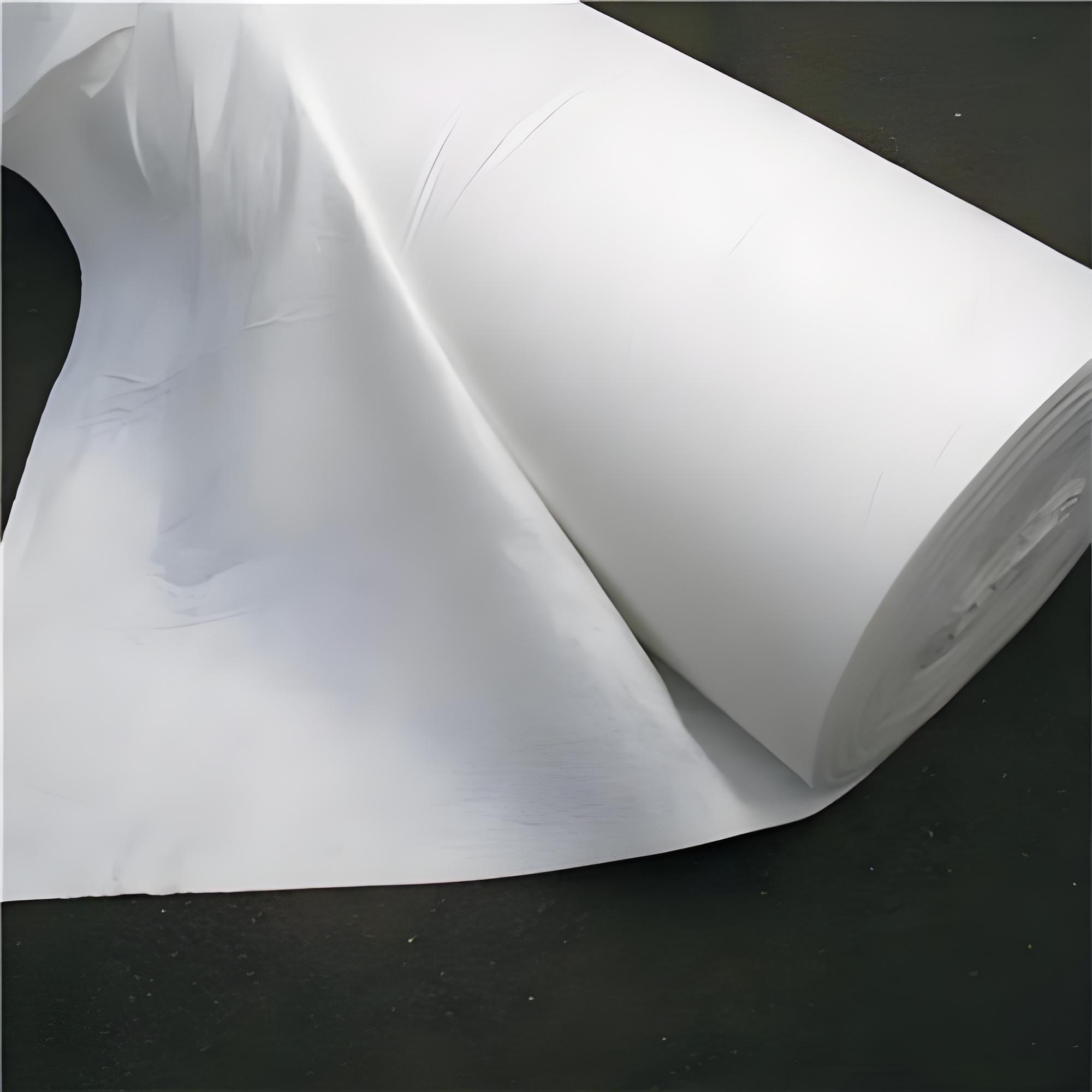
A geotextile is a permeable textile material used in contact with soil, rock or other geotechnical materials.
Geotextiles are widely used in civil engineering because they can perform several different functions.
Depending on the type and design, these functions may include:
Not every geotextile performs all of these functions equally.
Therefore, geotextile selection should be based on the required engineering function and relevant technical parameters.
One important function of geotextile in drainage applications is filtration.
Imagine a drainage core or perforated pipe surrounded directly by fine soil.
Water needs to enter the drainage system, but fine soil particles entering with the water can gradually accumulate inside drainage channels.
A properly selected filter geotextile can allow water to pass while helping to control the movement of soil particles.
The system can be represented as:
Soil → Geotextile Filter → Drainage Layer → Outlet
This is why geotextile is often used together with other drainage products rather than being considered only as an independent material.
Geotextiles can broadly include woven and nonwoven products.
Woven geotextiles are produced by interlacing yarns or strips.
Depending on their design, they may provide particular tensile and separation characteristics.
Nonwoven geotextiles are produced through bonding or entangling fibers rather than conventional weaving.
Certain nonwoven products are commonly used where filtration, drainage or protection functions are required.
However, it is not appropriate to assume that:
nonwoven is always better for drainage,
or:
woven is always stronger and therefore better.
Actual selection should consider the project specification and product properties.
Depending on the application and relevant standard, engineers may consider properties such as:
For filtration applications, there is an important balance.
The geotextile needs to:
allow sufficient water flow
while also:
providing suitable soil retention.
A product with an inappropriate pore structure may not provide the intended filtration behavior for a particular soil.
This is why geotextile selection should consider both the material and the surrounding soil.
A perforated drainage pipe contains openings that allow surrounding water to enter the pipe.
Once water enters, the pipe transports it along the drainage route toward a collection or discharge point.
Perforated drainage products can be used in:
Depending on the project, the pipe may be surrounded by:
Although both products are used for drainage, their structures are different.
| Feature | Plastic Blind Drain | Perforated Drain Pipe |
|---|---|---|
| Basic Structure | Porous/drainage core structure | Hollow pipe with openings |
| Main Function | Collect and transmit water through drainage structure | Collect and convey water through pipe |
| Filtration | May use external filter layer | Often combined with filter material |
| Shape | Depends on product design | Usually tubular |
| Application | Tunnel, wall, slope and subsurface drainage | Foundation, road, tunnel and general drainage |
| Selection Basis | Flow requirement, compression, dimensions, filtration | Diameter, flow capacity, perforation, structural requirements |
The two products may sometimes appear within the same overall drainage project.
They should not automatically be treated as direct substitutes.
Water in soil carries the potential for movement of fine particles.
If excessive fine material enters a drainage layer or pipe, it may accumulate and reduce available flow paths.
This can affect long-term drainage performance.
A filtration layer is therefore designed to manage two competing requirements:
Geotextile is one method used to perform this function.
Granular filter layers can also be used depending on the engineering design.
The appropriate filtration system depends on:
A waterstop is a material installed at a concrete joint to help control water movement through that joint.
Concrete structures often contain:
These joints can become potential water paths.
Waterstops are therefore incorporated into the joint region as part of the waterproofing design.
Common waterstop materials may include:
The appropriate type depends on the structure and joint conditions.
A copper waterstop is a metallic waterstop used in certain concrete and hydraulic engineering applications.
Copper has physical and chemical characteristics that make it suitable for specific waterstop designs.
Copper waterstops may be considered in projects where the engineering specification calls for a metallic joint-waterproofing component.
Possible applications can include certain:
The exact geometry, thickness and installation method depend on the engineering specification.
A waterstop is positioned across or along a concrete joint so that water cannot move through the joint along a simple direct path.
Its effectiveness depends not only on the material but also on:
This is an important distinction.
Selecting a suitable waterstop does not compensate for incorrect installation.
Waterstop design and installation should therefore be considered together.
Copper and PVC waterstops can both be used for joint-waterproofing purposes, but they are different materials.
| Property | Copper Waterstop | PVC Waterstop |
|---|---|---|
| Material | Metal | Polymer |
| Flexibility | Depends on geometry and thickness | Generally flexible |
| Joint Design | Project-specific | Available in multiple profiles |
| Connection Method | Depends on design | Often welded according to system |
| Application | Certain hydraulic and structural projects | Broad concrete joint applications |
| Selection | Engineering specification required | Engineering specification required |
It would be inaccurate to state that one material is universally better than the other.
The selection depends on:
This distinction is important in underground engineering.
Drainage gives water a controlled route to move away.
Waterproofing is intended to limit or prevent water penetration through a structural boundary.
These functions are different.
For example, a retaining wall may use a waterproofing layer to limit water penetration while also using a drainage system behind the wall to reduce water accumulation.
The two systems can work together.
Therefore:
Waterproofing does not necessarily eliminate the need for drainage.
And:
Drainage does not automatically replace waterproofing.
Water can accumulate in soil behind a retaining wall.
If drainage is inadequate, this water can contribute to hydrostatic pressure.
A retaining wall drainage system may therefore include combinations of:
The specific design depends on soil, groundwater and structural conditions.
A continuous drainage path is important.
Collecting water without providing an appropriate outlet does not complete the drainage system.
Tunnel drainage requirements depend on tunnel type, geology, groundwater and waterproofing design.
Water can enter from surrounding rock or soil and may need to be collected before being directed to longitudinal drainage systems and discharge points.
Materials used in tunnel drainage can include:
The arrangement depends on the tunnel design.
This is another example where several products function as one integrated system.
Depending on the tunnel system, geotextile may be used for:
For example, a geotextile layer may help protect a waterproofing membrane from irregular substrate surfaces.
In other designs, filtration performance may be more important.
Therefore, the term “tunnel geotextile” alone does not define the required specification.
The design function needs to be identified first.
Foundation drainage systems may use combinations of:
A simplified arrangement may be:
Foundation wall → Waterproofing → Drainage layer → Filter → Collection pipe → Discharge
The actual sequence varies by project.
The important concept is to provide a controlled route from water collection to final discharge.
When selecting drainage materials, simply stating that a product "drains water" is not enough.
The system may need to handle a certain flow under particular conditions.
Drainage behavior can be influenced by:
A drainage product may also be subjected to soil or structural pressure.
Therefore, both hydraulic and mechanical conditions should be considered.
Some underground drainage products are installed under soil pressure or between structural layers.
If a drainage core deforms substantially under load, the available flow space may change.
Therefore, depending on the application, relevant parameters may include:
This is particularly relevant for drainage cores and blind-drain products used in buried applications.
A useful selection process starts with the project rather than the product.
Is the problem:
Does the project need:
Consider:
Consider:
Choose products based on the required hydraulic and mechanical properties.
Determine where collected water will go.
This last step is sometimes overlooked.
A drainage layer without an appropriate discharge route may not provide the intended system performance.
Several general issues should be considered when planning a drainage system.
Thickness alone does not define filtration, drainage or mechanical performance.
A filter material suitable for one soil may not be suitable for another.
Collected water still requires a continuous discharge route.
They perform different functions.
Incorrect overlap, connection, placement or damage during construction can affect system performance.
Two products with similar names may have different structures and specifications.
Engineering parameters should be compared.
Depending on the design, relevant information can include:
The required values should be determined according to the engineering design and applicable standards.
Possible selection parameters include:
When comparing products, technical parameters measured under defined test conditions are more useful than general statements such as "high drainage."
Waterstop selection may consider:
The waterstop should be compatible with the actual joint design.
Depending on the project, materials can include geotextiles, plastic blind drains, drainage cores, perforated pipes, granular filters and related drainage products.
It provides a drainage path for collecting and transporting subsurface water in suitable civil engineering applications.
One common purpose is filtration: allowing water to pass while helping control the migration of surrounding soil particles.
Geotextile is generally a permeable material and should not automatically be treated as a waterproof membrane.
A waterstop is installed at concrete joints to help control water movement through the joint.
Copper waterstops are used in certain concrete, underground and hydraulic structures where a metallic waterstop is specified.
Not necessarily. Drainage and waterproofing perform different functions and may be used together.
Not necessarily. The answer depends on groundwater conditions and the overall engineering design.
A plastic blind drain generally uses a porous drainage structure, while a perforated pipe collects water through openings and conveys it through a hollow pipe.
Selection should consider water source, soil conditions, hydraulic requirements, structural loads, filtration requirements, installation and discharge design.
One of the most useful ways to approach underground drainage and waterproofing is to avoid looking at each material in isolation.
For example:
Geotextile may provide filtration.
↓
Plastic blind drain may collect and transmit water.
↓
Perforated drainage pipe may convey the collected water.
↓
Waterproofing layer may limit water penetration into the structure.
↓
Waterstop may address potential water paths at concrete joints.
Each component has a different function.
When these functions are coordinated according to engineering requirements, they form an underground water-management system.
Underground structures can be exposed to groundwater, seepage and other sources of water throughout construction and service.
Managing this water often requires a combination of drainage, filtration, waterproofing and joint-waterproofing materials rather than a single product.
Geotextiles can provide filtration, separation, protection or drainage functions depending on their design.
Plastic blind drains and perforated drainage products can provide routes for collecting and transporting subsurface water.
Waterstops, including copper waterstops in appropriate applications, can be incorporated into concrete joints to control potential water paths.
The selection of these materials should be based on the actual engineering conditions, including:
For underground construction, the key question is therefore not simply “Which drainage material should be used?”
A more useful question is:
What functions must the complete drainage and waterproofing system perform, and which materials are appropriate for each function?
Answering that question provides a clearer basis for selecting materials for tunnels, retaining walls, foundations, roads and other underground civil engineering projects.
Consultation Hotline:
+86 13889850231
Email:sales01@xzhch.com
Address:No.33, Nan'er Road, Heping District, Shenyang, Liaoning Province
Copyright © 2002-2025 非商用版本 Registration:Liaoning ICP record