Contact us
|
Whatsapp
Whatsapp:+86 13889850231
Whatsapp:+86 13889850231

Industrial concrete floors are expected to withstand forklift traffic, storage racks, machinery, impact, abrasion and repeated loading. Unlike ordinary residential floors, warehouse and factory slabs often cover large areas and operate under demanding service conditions.
Steel fiber reinforced concrete, commonly abbreviated as SFRC, is one reinforcement option used in industrial floors. Steel fibers are distributed throughout the concrete matrix, where they can bridge cracks and contribute to toughness and residual load-bearing performance after cracking.
However, selecting steel fiber for an industrial floor involves more than choosing a fiber length or dosage. Floor design, concrete properties, subgrade conditions, joint layout, construction method and required performance must all be considered.
This guide explains the role of steel fiber in industrial flooring, common fiber types, selection factors and practical application considerations.
Concrete provides high compressive strength but relatively limited tensile capacity. When tensile stress exceeds the tensile strength of the concrete, cracking can occur.
Common causes of cracking in industrial floors include:
Plastic shrinkage during the early stage after placement
Drying shrinkage as moisture leaves the concrete
Temperature changes
Restrained movement
Differential settlement
Heavy rack or wheel loads
Impact and vibration
Improper joint spacing
Inadequate curing
Uneven or poorly compacted subgrade
Not every crack has the same cause, and no single reinforcement material can eliminate all cracking. Effective floor performance depends on the combined design of the slab, reinforcement, joints, concrete mixture, subbase and curing system.
Steel fibers can contribute to crack-width control and post-cracking performance, but they should be treated as part of an engineered flooring system rather than a universal solution.
Steel fibers are short, discrete metallic fibers designed to be mixed into fresh concrete. When properly dispersed, they form three-dimensional reinforcement throughout the concrete matrix.
Common steel fiber shapes include:
Hooked-end steel fiber
Crimped steel fiber
Corrugated steel fiber
Straight steel fiber
Indented steel fiber
Bundled glued steel fiber
When a crack begins to form, fibers crossing the crack can transfer stress between the two sides. This is known as the fiber-bridging effect.
Unlike conventional reinforcing bars, steel fibers are distributed throughout the concrete volume. Their principal contribution is generally associated with crack control, toughness and residual flexural performance after the concrete matrix cracks.
The actual performance depends on:
Fiber geometry
Fiber tensile strength
Aspect ratio
Bond with the concrete
Dosage
Concrete strength
Fiber orientation
Mixing and placement quality
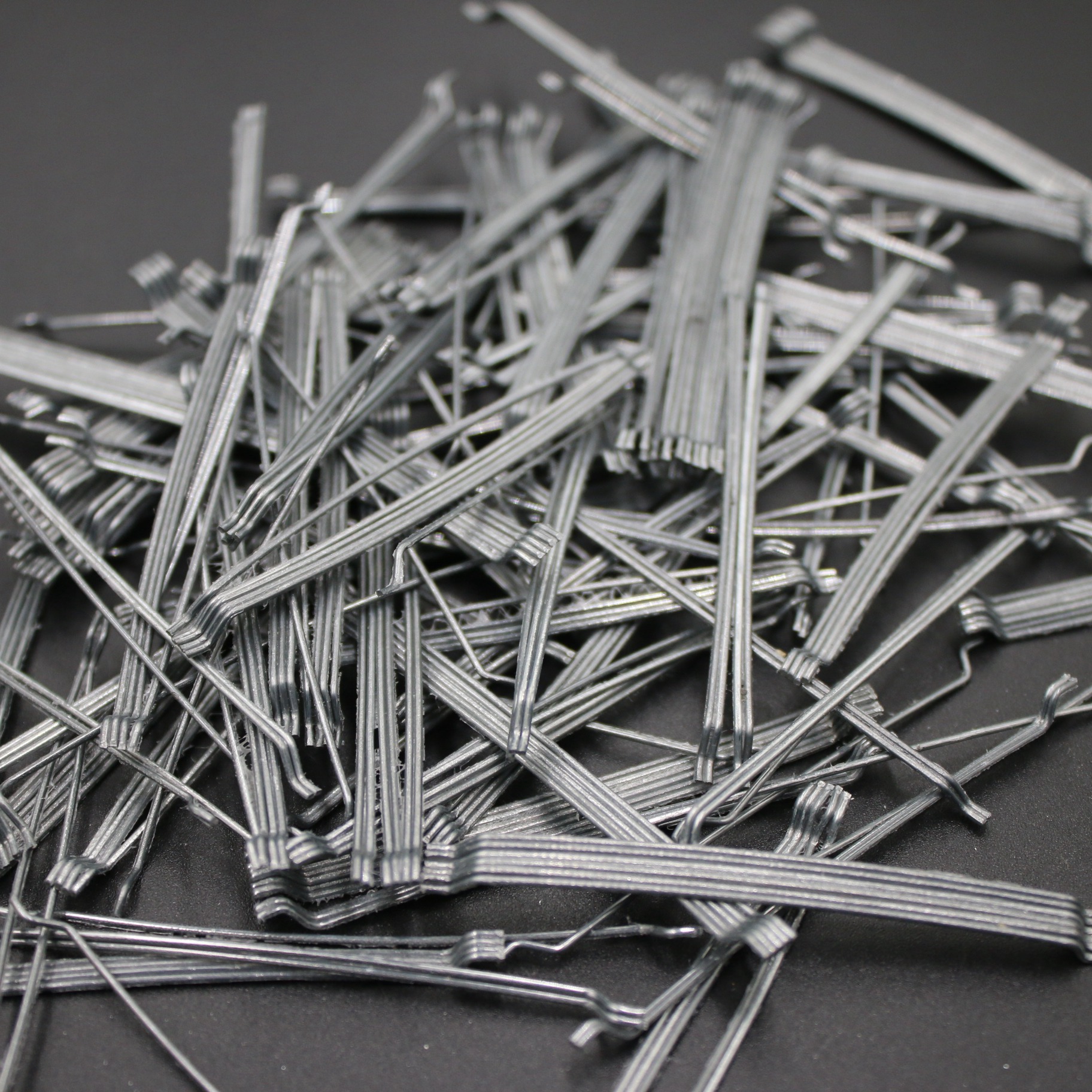
Steel fibers can bridge cracks after they form and help limit further crack opening. This can improve the ability of the slab to maintain integrity under service loads.
Steel fibers do not necessarily prevent every visible crack. Their role is more accurately described as controlling crack development and contributing to post-cracking performance.
Toughness describes the ability of concrete to absorb energy before failure. Industrial floors may experience impact from tools, pallets, equipment and dropped materials.
Steel fibers can increase the energy absorption capacity of concrete and reduce brittle post-cracking behavior.
After plain concrete cracks, its tensile load-bearing capacity decreases rapidly. Steel fibers crossing the crack can continue carrying part of the load.
This residual performance is important in fiber-reinforced concrete design. It should be evaluated using relevant flexural or residual-strength tests rather than inferred only from fiber tensile strength.
Warehouse slabs and logistics floors are exposed to repeated forklift and wheel traffic. Steel fibers may contribute to fatigue and crack-control performance when the slab and fiber system are properly designed.
Factories, workshops and loading areas may experience local impact. Steel fiber reinforced concrete generally offers greater toughness than comparable plain concrete, although performance depends on the complete concrete system.
Steel fiber may be considered for:
Warehouse floors
Logistics-center slabs
Manufacturing-plant floors
Distribution-center floors
Cold-storage floors
Loading areas
Heavy-duty workshops
Aircraft hangars
Container yards
Parking structures
Industrial pavements
Selected jointless or reduced-joint floor systems
Each application has different loading and durability requirements. A warehouse with high-bay storage racks, for example, requires different analysis from a light manufacturing workshop.
The design should consider point loads, wheel loads, load repetition, rack-leg configuration, subgrade support and expected service life.
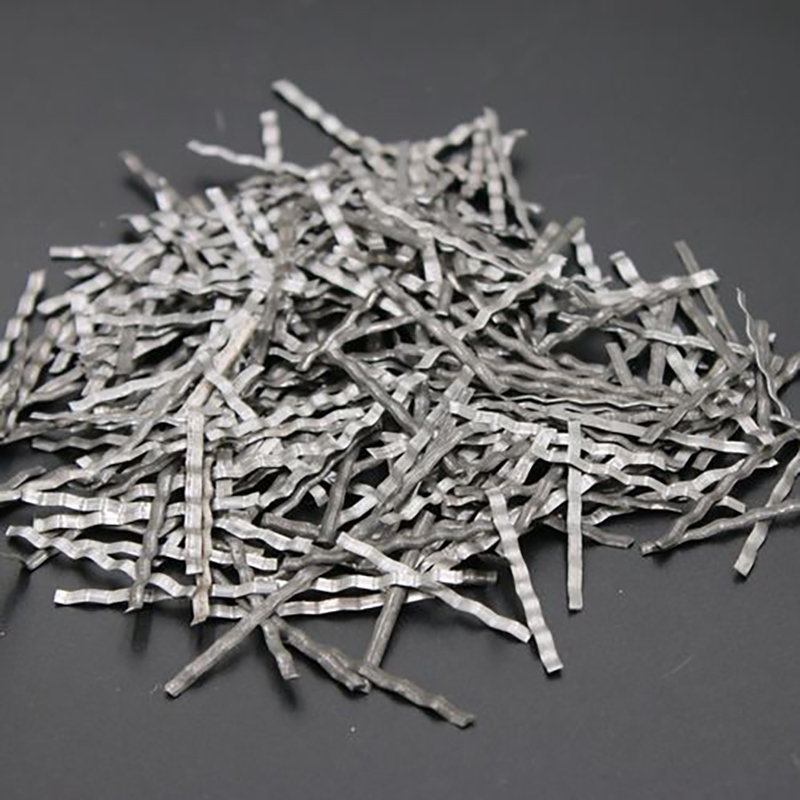
Hooked-end fibers have deformed ends that improve mechanical anchorage in the concrete. They are widely considered for industrial slabs because their geometry helps resist fiber pull-out after cracking.
Selection variables include:
Length
Diameter
Aspect ratio
Hook geometry
Tensile strength
Dosage
Bundled or loose form
Crimped and corrugated fibers use a deformed profile to improve mechanical interaction with the concrete matrix. Their suitability depends on the required performance and mixing conditions.
Straight fibers have a simpler geometry and may disperse relatively easily. However, their pull-out behavior differs from that of hooked or deformed fibers.
Some hooked-end fibers are supplied in bundles held together by water-soluble adhesive. During concrete mixing, the adhesive dissolves and the fibers separate.
This format can assist dosing and dispersion, but the correct mixing sequence and sufficient mixing time remain necessary.
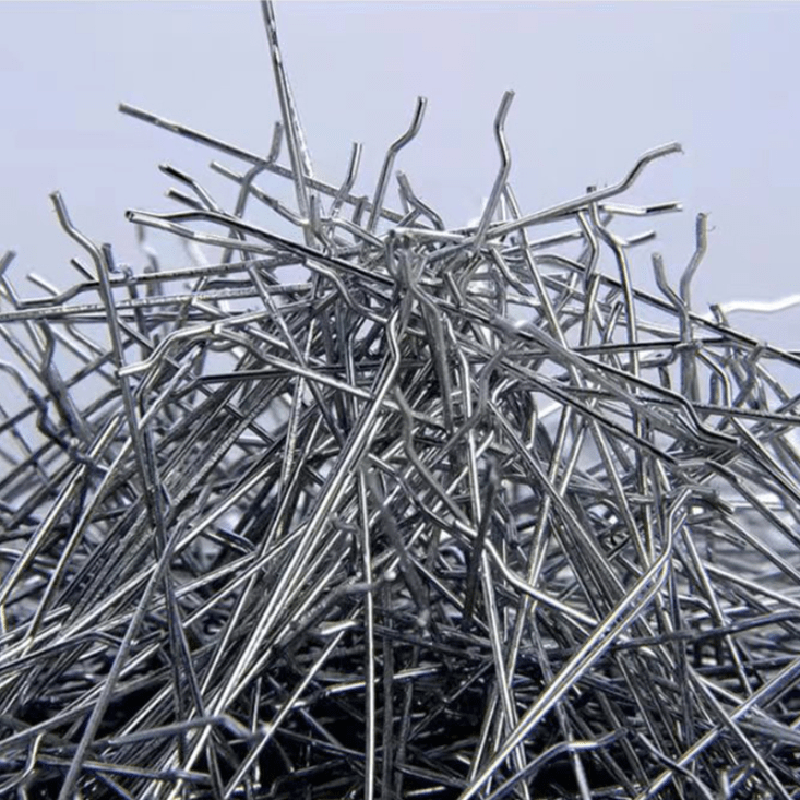
Steel fibers used in concrete are available in different lengths. The appropriate length must be selected in relation to:
Maximum aggregate size
Slab thickness
Concrete mixing equipment
Pumping requirements
Placement method
Required mechanical performance
Longer fibers are not automatically better. Excessive length may increase the risk of poor dispersion, fiber balling or construction difficulty.
Fiber diameter influences the aspect ratio and the number of fibers distributed within a given mass. Some non-circular fibers are described using an equivalent diameter.
The aspect ratio is generally calculated as:
Aspect Ratio = Fiber Length ÷ Fiber Diameter
A higher aspect ratio can improve anchorage and bridging efficiency, but it may also reduce workability and make dispersion more difficult.
The aspect ratio should therefore be considered together with fiber shape, dosage and concrete rheology.
Steel fiber tensile strength must be sufficient for the intended concrete system. However, a higher tensile-strength value alone does not guarantee better floor performance.
If the fiber pulls out before its tensile capacity is mobilized, geometry and bond behavior may be more influential than the nominal tensile strength.
The elastic modulus of conventional steel fiber is generally approximately 200 GPa, depending on the steel grade. It should not normally be described as 400 GPa unless supported by test data for a specific material.
Steel fiber dosage may be expressed as:
Kilograms per cubic metre
Pounds per cubic yard
Volume fraction
The required dosage must be determined by floor design and performance testing. It should not be selected solely from a generic online recommendation.
Industrial floor applications may use different dosage levels depending on load, slab thickness, fiber type and required residual performance. The project engineer’s design and applicable standards should take priority.
Steel fiber and polypropylene fiber perform different functions and should not be treated as direct substitutes.
| Comparison | Steel Fiber | Micro Polypropylene Fiber |
|---|---|---|
| Material | Steel | Synthetic polymer |
| Elastic modulus | High | Relatively low |
| Main contribution | Toughness and residual post-cracking performance | Control of plastic-shrinkage cracking |
| Typical dosage | Determined by structural or performance design | Generally used at comparatively low dosage |
| Corrosion | Requires consideration of exposure conditions | Does not corrode |
| Effect on workability | Can be significant at higher dosage | Usually less significant at normal micro-fiber dosage |
| Common floor role | Distributed reinforcement for load-related performance | Early-age shrinkage crack control |
In some industrial floors, steel fiber and micro polypropylene fiber may be used together. Steel fiber supports post-cracking behavior, while micro PP fiber targets early plastic-shrinkage cracking.
A hybrid system should be verified through mixture trials and engineering design.
Steel fiber may replace some or all conventional reinforcement in certain industrial-floor designs, but replacement should never be assumed automatically.
The decision depends on:
Floor loading
Slab thickness
Subgrade modulus
Joint design
Fiber residual-strength data
Exposure conditions
Local building codes
Structural requirements
Engineering calculations
Conventional reinforcement may still be required around:
Columns
Pits
Drains
Doorways
Corners
Openings
Construction joints
Areas with concentrated loads
Any reinforcement substitution should be approved by the responsible engineer and supported by appropriate design data.
Adding steel fibers changes the behavior of fresh concrete. Possible effects include:
Reduced slump or flow
Increased cohesiveness
Greater mixing-energy requirement
Risk of fiber balling
Changes in finishing behavior
Increased demand for paste volume
It is not advisable to restore workability by adding uncontrolled water because this may increase the water-to-cement ratio and affect strength, shrinkage and durability.
A compatible water-reducing admixture or polycarboxylate superplasticizer may be used when appropriate. Its compatibility with the cement, supplementary cementitious materials and steel fiber should be confirmed through trial batches.
Mix design factors include:
Cementitious-material content
Water-to-binder ratio
Aggregate grading
Maximum aggregate size
Sand content
Admixture compatibility
Required slump or flow
Fiber geometry and dosage
Mixing time
The actual procedure should follow the concrete plant, equipment and fiber supplier’s recommendations. A general sequence may include:
Add aggregates and part of the cementitious materials.
Introduce the steel fibers gradually rather than as one compact mass.
Mix sufficiently to distribute the fibers.
Add water and admixtures according to the approved mix procedure.
Continue mixing until the concrete appears uniform.
Inspect the mixture for fiber clusters before discharge.
For glued fiber bundles, moisture and mixing action allow the bundles to separate. Insufficient mixing time can leave bundles partially undispersed.
Fibers should not be dumped into stationary wet concrete without a verified procedure.
Good fiber selection cannot compensate for poor construction.
Concrete should be placed consistently to avoid segregation and uneven fiber distribution. Pumping feasibility should be checked before construction, especially when using long fibers or high dosages.
Fibers close to the surface may become visible if finishing is inadequate. Suitable finishing procedures, equipment timing and surface mortar availability are important.
Steel fibers do not remove the need for proper joint design. Joint spacing, saw-cut timing, depth and layout should be coordinated with the slab design.
Early moisture loss can cause shrinkage cracking even when fibers are present. Appropriate curing should begin promptly after finishing.
Possible curing methods include:
Curing compounds
Wet coverings
Plastic sheeting
Other methods specified by the project engineer
Quality control should cover both the steel fiber and the concrete.
Buyers should request:
Product specification
Batch Certificate of Analysis
Tensile-strength information
Fiber dimensions
Aspect ratio
Packaging information
Applicable conformity documentation
For European applications, relevant requirements may include EN 14889-1 for steel fibers used in concrete.
Recommended checks may include:
Slump or flow
Concrete temperature
Air content where applicable
Density
Visual inspection for fiber dispersion
Confirmation of fiber dosage
Mixing-time records
Depending on the project, testing may include:
Compressive strength
Flexural performance
Residual flexural tensile strength
Toughness
Abrasion resistance
Surface flatness
Crack-width inspection
Residual-performance tests are particularly important when steel fiber is used as an engineered reinforcement system.
Before requesting a quotation, provide the supplier with:
Floor application
Slab thickness
Concrete strength class
Maximum aggregate size
Required fiber shape
Required length and diameter
Required tensile strength
Designed dosage
Applicable standard
Mixing and pumping method
Project location
Required packaging and order quantity
If the project has not yet determined the fiber specification, the supplier should request the engineering requirements rather than recommend a dosage based only on floor area.
No. Steel fiber can contribute to crack control and post-cracking performance, but cracking is also affected by shrinkage, temperature, subgrade conditions, joints, curing and construction quality.
No. Higher dosage may increase toughness, but it can also reduce workability and increase the risk of poor dispersion. Dosage should be based on design and testing.
Many steel fiber concrete mixtures can be pumped, but pumpability depends on fiber dimensions, dosage, aggregate grading, concrete rheology and pumping equipment.
Fibers exposed at the surface may oxidize, particularly in wet or aggressive environments. Proper concrete cover, finishing and fiber selection should be considered. Surface staining does not necessarily indicate a loss of internal structural performance, but project exposure requirements must be evaluated.
Yes, hybrid systems may be considered because the two fibers can address different performance requirements. The mixture should be tested before full-scale use.
Steel fiber is a distributed concrete reinforcement material used in industrial floors to support crack control, toughness and residual post-cracking performance. It is commonly considered for warehouses, logistics centers, manufacturing plants, workshops and other floors exposed to repeated or concentrated loads.
Successful application depends on more than the fiber itself. Fiber geometry, tensile strength, aspect ratio and dosage must be coordinated with slab design, concrete mix, subgrade support, joint layout, placement and curing.
Before commercial application, project requirements should be reviewed by the responsible engineer, and the proposed steel fiber concrete should be verified using trial batches and relevant performance tests.
Consultation Hotline:
+86 13889850231
Email:sales01@xzhch.com
Address:No.33, Nan'er Road, Heping District, Shenyang, Liaoning Province
Copyright © 2002-2025 非商用版本 Registration:Liaoning ICP record