Contact us
|
Whatsapp
Whatsapp:+86 13889850231
Whatsapp:+86 13889850231

Concrete joints are necessary in many construction projects. They may be formed when concrete is placed in separate sections, or where a structure is designed to accommodate movement. In water-retaining and underground structures, these joints also need careful detailing to help control water passage.
A copper waterstop is one material that may be specified for selected concrete joint applications. Its suitability depends on the joint design, project conditions, product details and installation method. This guide outlines practical considerations for selecting and checking a copper waterstop on site.
A copper waterstop is a formed metal strip incorporated into a concrete joint. When positioned as specified, part of the strip is embedded in one concrete section and the remaining part continues through the joint into the adjoining section.
The waterstop forms part of the joint’s water-control detail. Its effectiveness depends on the complete system, including the joint design, the selected profile, connection details, concrete placement and workmanship.
A copper waterstop should not be selected by material name alone. Project drawings and technical documents should confirm the required profile, dimensions, material grade and joining method.
Copper waterstops may be considered for certain concrete structures where joint water control is required. Examples can include water-retaining structures, hydraulic works and some underground construction projects.
The appropriate material and profile depend on the application. A detail designed for a stationary construction joint may not be suitable for a joint that is expected to move. Before specifying a product, the project team should identify the joint type and review the relevant design documents.
Several project details should be confirmed before ordering or installation:
Confirm whether the waterstop is intended for a construction joint or another joint type. The anticipated movement, joint geometry and design conditions affect the profile and installation detail.
Check the required profile, width, thickness and any formed features against the drawings and approved submittals. Do not assume that a profile used on one project will suit another.
Review the product’s technical data and any project requirements for material grade, tolerances, testing or inspection. If the specification calls for a particular standard, confirm that the product documentation addresses it.
Changes in direction, intersections and terminations should be resolved before installation. Confirm how these details are to be fabricated and joined, and whether the proposed method is approved for the project.
The waterstop should be inspected before concrete placement, while its position and connections are still accessible.
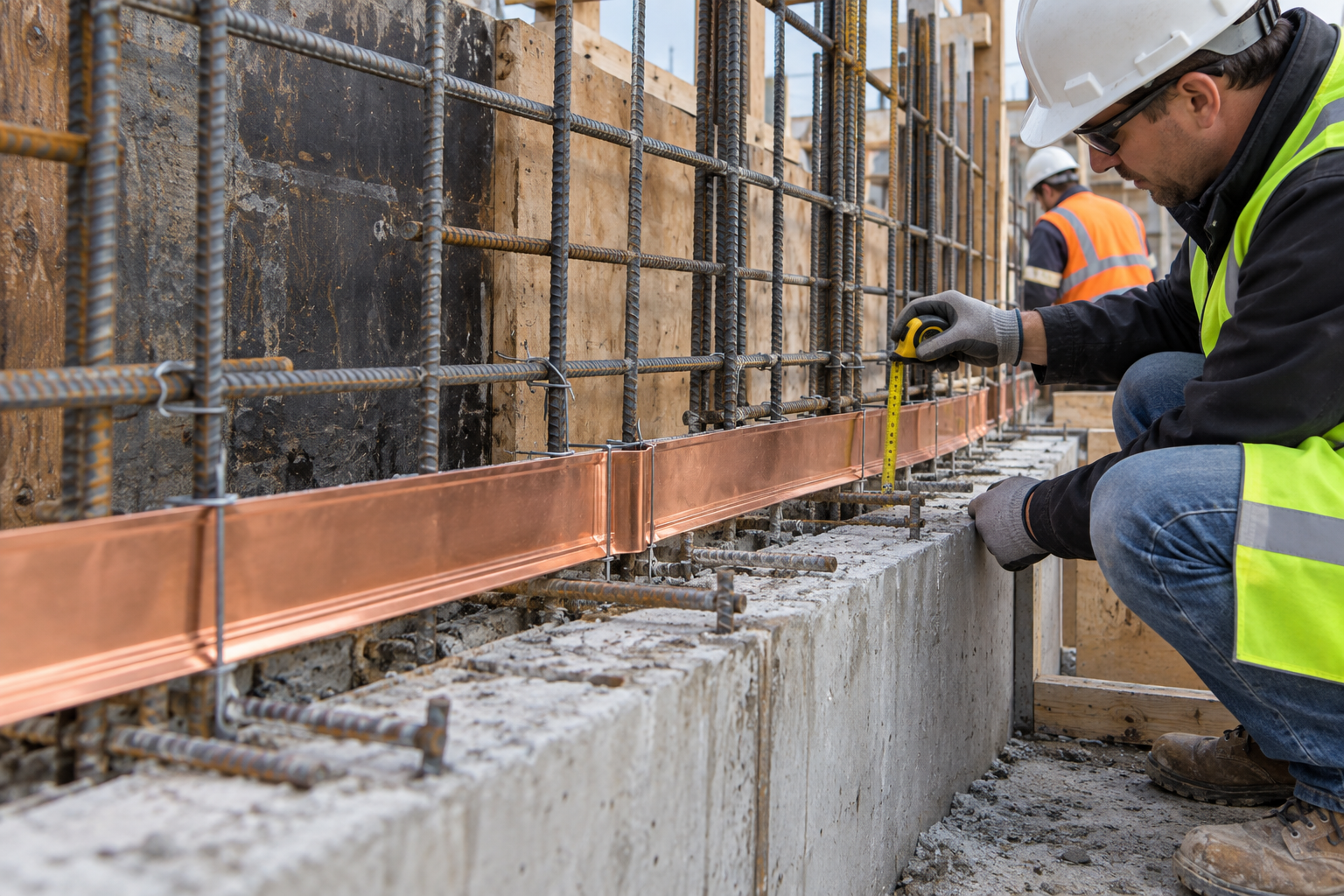
Check the waterstop’s location against the joint detail. Confirm that the portion to be embedded in each concrete pour is positioned as intended.
The waterstop should be supported using the method specified for the project. Review whether it is held securely enough to maintain its position during concrete placement and vibration.
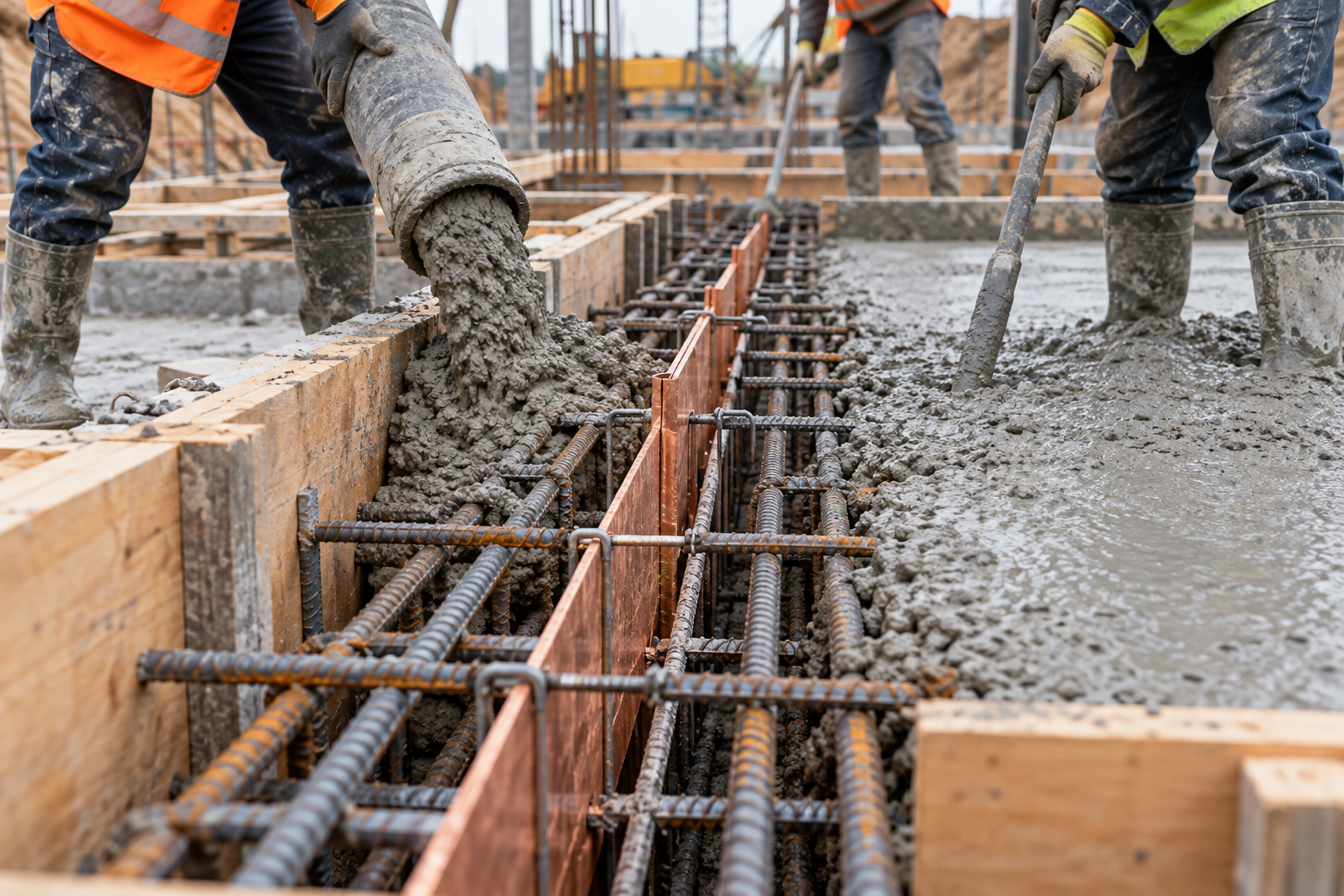
Check that joints between sections, corners and transitions follow the approved detail. Look for visible gaps, damage or misalignment, and resolve concerns before the pour.
Confirm that reinforcement and formwork do not force the waterstop out of position or prevent concrete from being placed around it. Any site adjustment should be reviewed against the approved drawings and method statement.
Inspect the portions that will be embedded. Remove loose debris or other visible contamination in accordance with the project procedure and product guidance.
Concrete placement should be planned to help keep the waterstop in its specified position. The crew should avoid striking, bending or displacing it with equipment, reinforcement or formwork.
Concrete should be placed and consolidated around the waterstop in accordance with the approved method. Inadequate consolidation or trapped voids near the joint may affect the quality of the concrete around the embedded component. Site teams should follow the project’s concrete placement and inspection procedures.
If the waterstop moves, becomes damaged or a connection is questioned during placement, the issue should be raised with the responsible engineer or site supervisor. Corrective work should follow an approved instruction.
Before and during the pour, the inspection team can check for:
These checks do not replace project inspection requirements. They help identify issues while the waterstop remains accessible.
To help match a copper waterstop to a project, provide the supplier with the joint detail, required profile and dimensions, material requirements, connection details, project specifications and any documentation requirements.
If these details are not yet finalized, clarify which items are confirmed and which remain subject to design review. Product selection and installation should be checked against the project documents before construction.
Copper waterstop can be considered for concrete joints where the project design calls for it. Correct selection begins with understanding the joint type and confirming the required profile, dimensions, material documentation and connection details.
On site, position, support, connections and surrounding reinforcement should be reviewed before concrete placement. The approved project drawings and installation method remain the controlling references for each application.
Consultation Hotline:
+86 13889850231
Email:sales01@xzhch.com
Address:No.33, Nan'er Road, Heping District, Shenyang, Liaoning Province
Copyright © 2002-2025 非商用版本 Registration:Liaoning ICP record